 Weather today
Today marks 10 years since March 1 tragic events

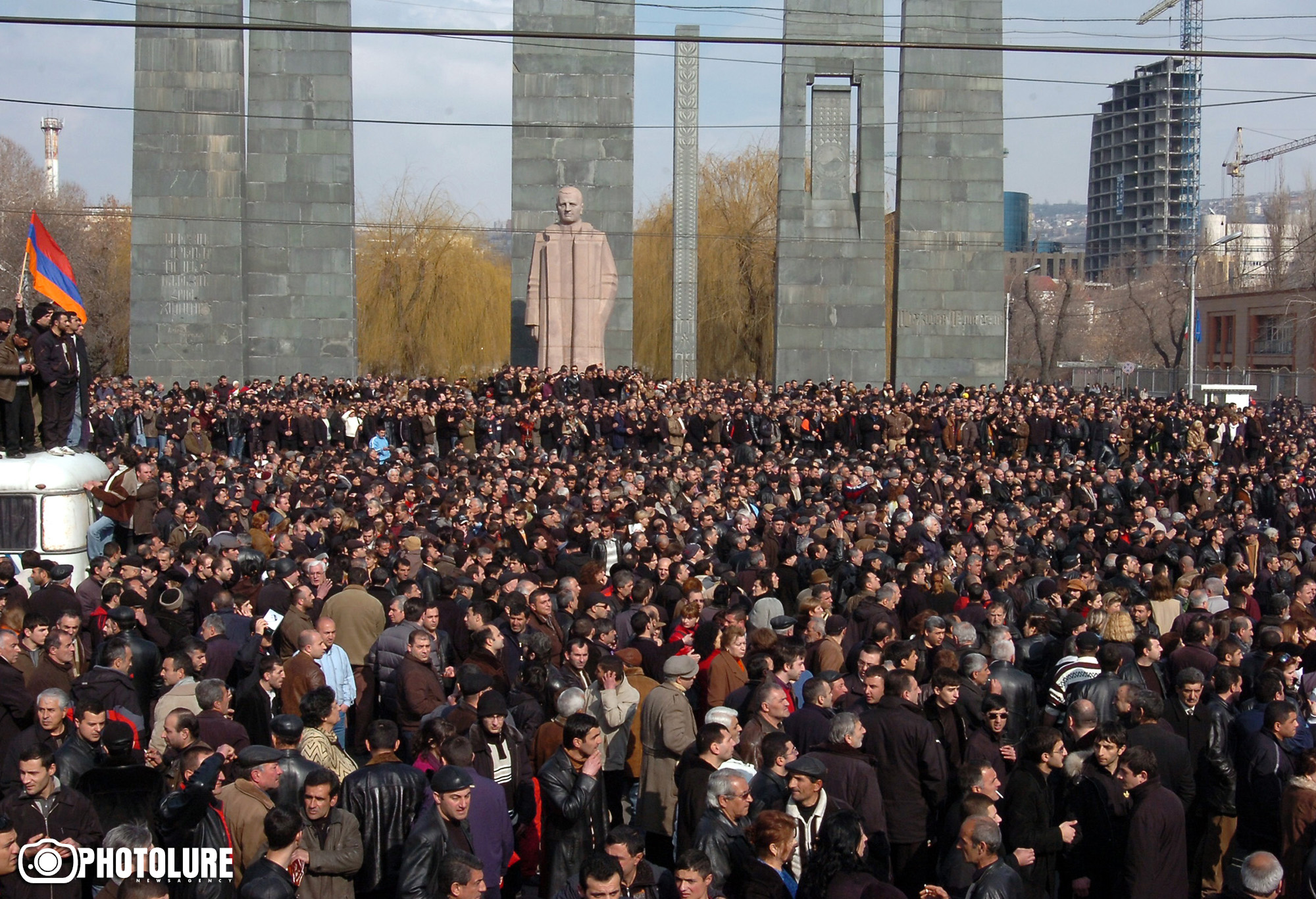
Today marks the 10th anniversary of the 2008 post-electoral tragic events that saw 10 people dead in Armenia’s capital in the wake of violent clashes with police and security forces.
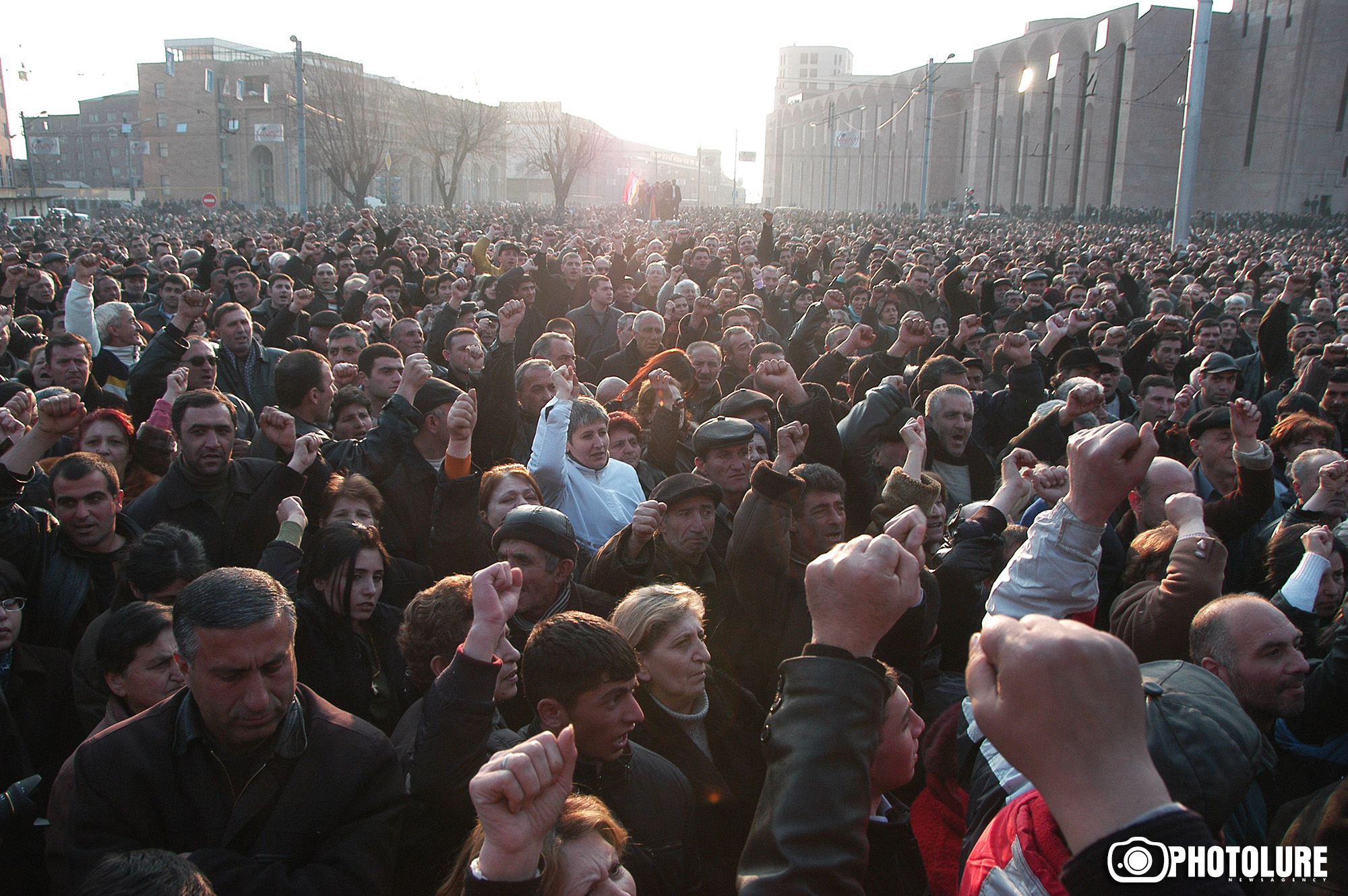
Thousands of demonstrators took the streets for public protests days earlier to dispute the results of the February 19 presidential election.
The violent turmoil left both civilians and police officers killed. They confirmed victims were Tigran Khachatryan, Zakar Hovhannisyan, Gor Kloyan. Devid Petrosyan, Armen Farmanyan, Samvel Harutyunyan, Tigran Abgaryan (serviceman), Grigor Gevorgyan and Hamlet Tadevosyan (policeman). Around 300 people were hospitalized with fragment injuries and other bodily damages.
The criminal records revealed that an estimated 278 people (221 police officers and 57 demonstrators) suffered different injuries. The public transport in Yerevan was disrupted; around 220 police officers and 58 civilians were reported to have suffered physical or bodily damages.
Some 152 people faced criminal charges, but only 117 cases were submitted to court.
Hundreds were jailed over criminal plotting mass disorder (Article 225.2, Criminal Code of Armenia), making public calls for changing the constitutional order (Article 301), using violence against a representative of authorities (Article 316) and robbery (Article 176).
The violent turmoil followed days of public demonstrations that rallied supporters of first President Levon Ter-Petrosyan.
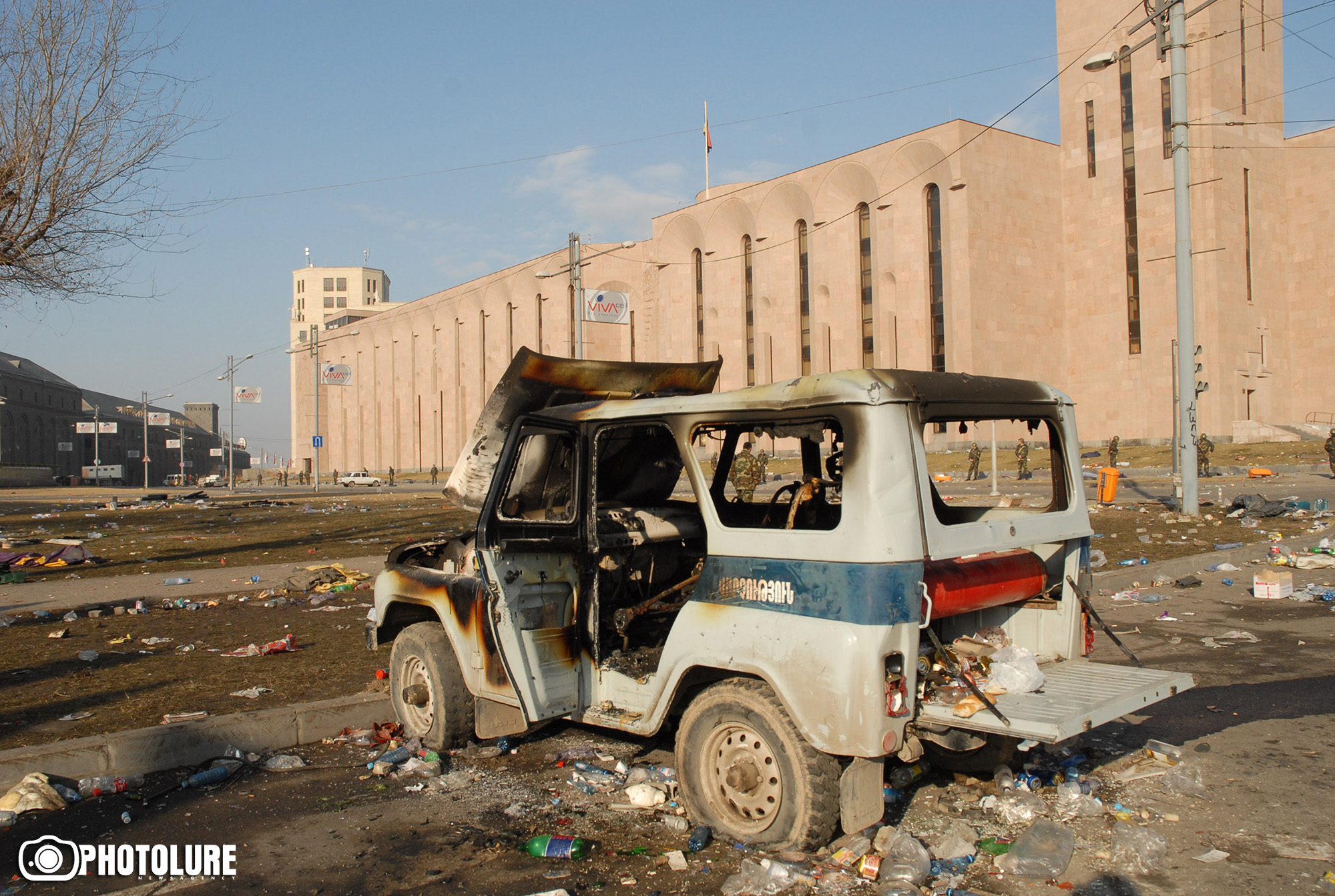
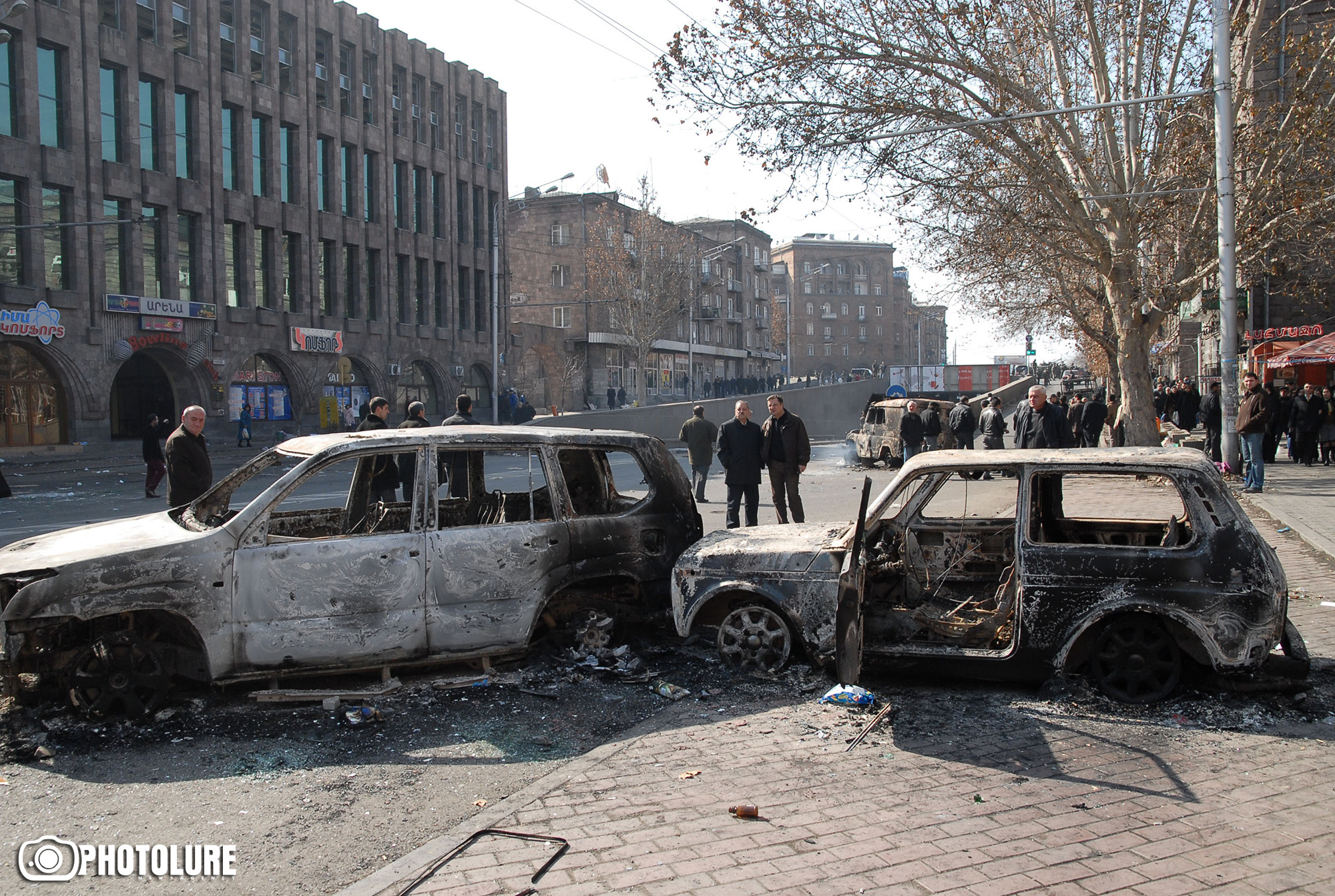
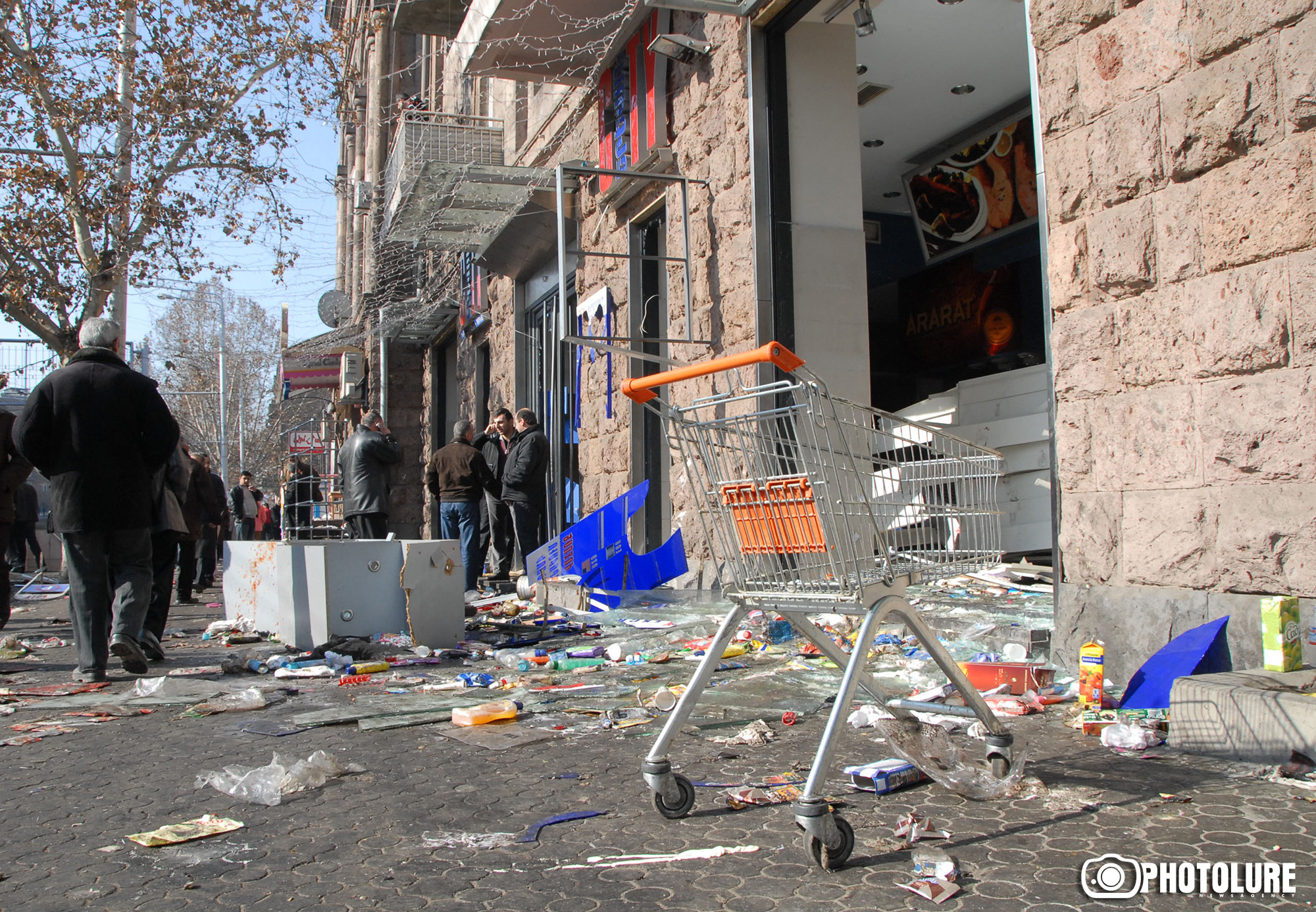
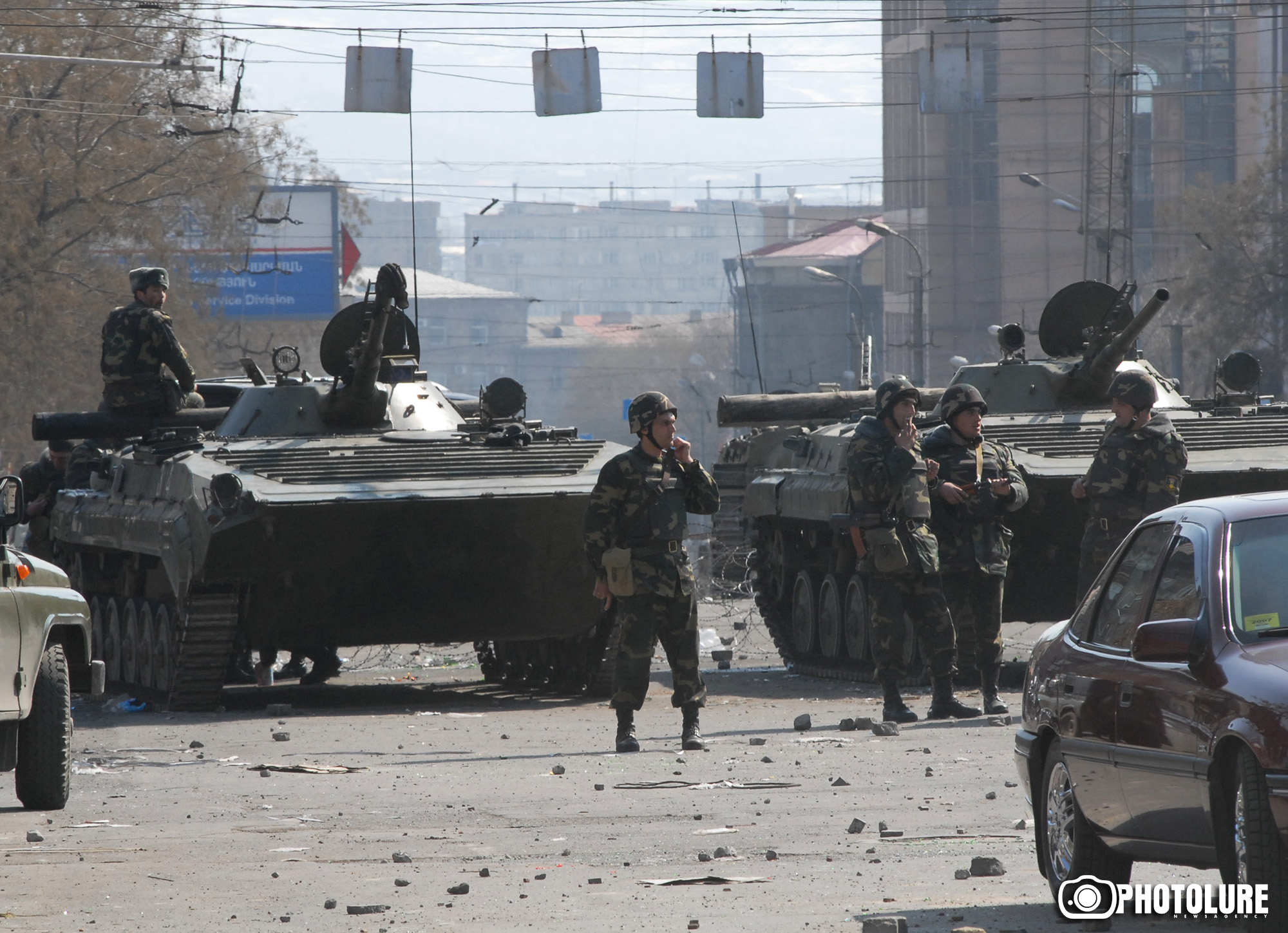
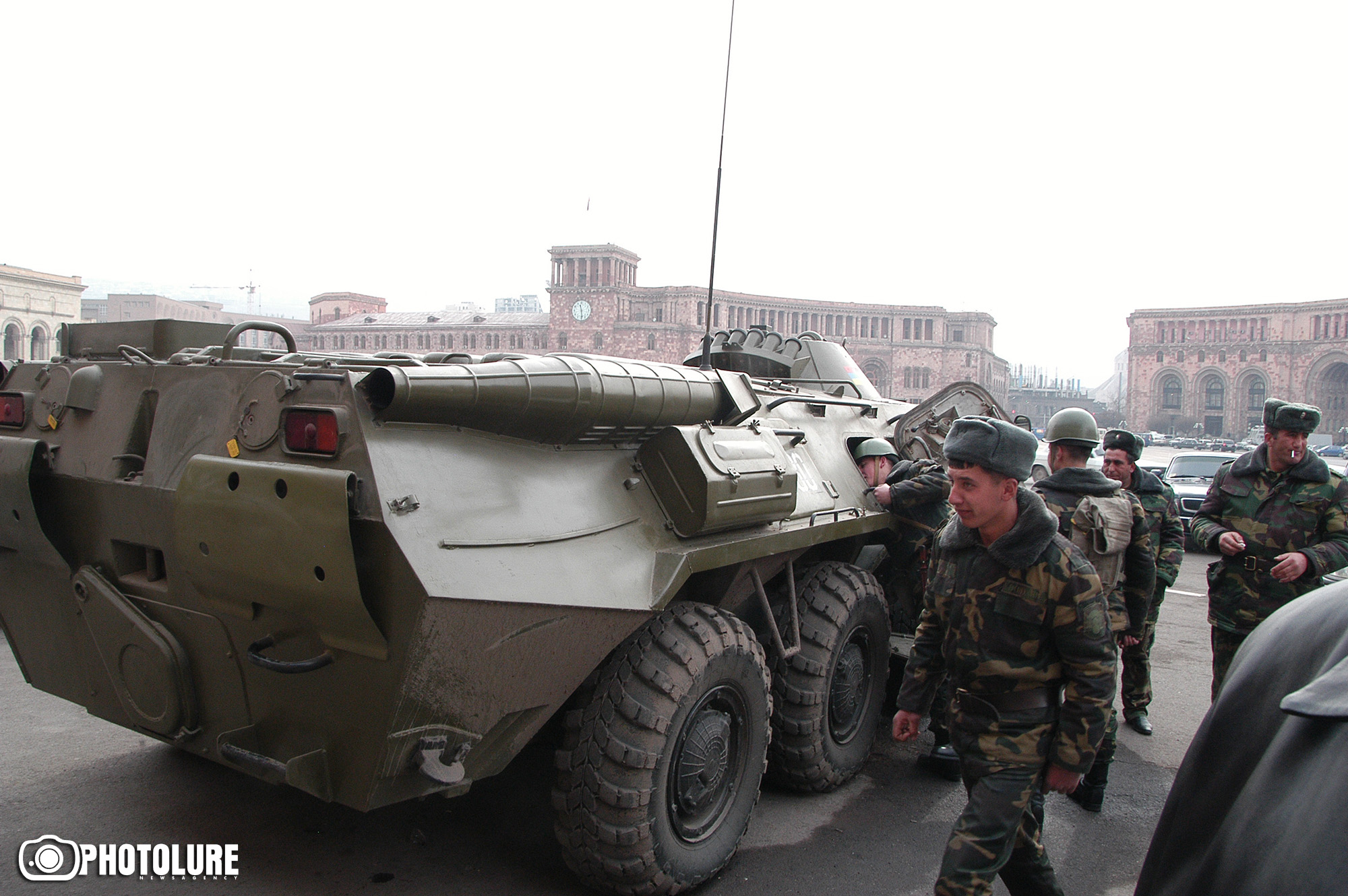
At noon on 1 March, a crowd of at least 10,000 protesters held a rally in front of the French embassy. Police officers pulled away from the area by 16:00, as they were overwhelmed by the growing number of demonstrators. Activists then used abandoned police buses to set up barricades. In the evening, clashes broke out between riot police and about 2,000 protesters who barricaded themselves at Miasnikyan Square. At around 22:00, President Robert Kocharyan, with the approval of the Armenian parliament, declared a 20-day state of emergency, banning future demonstrations and censoring the media from broadcasting any political news except those issued by official state press releases. Kocharian justified the decision on the grounds that a minority of demonstrators looted a nearby grocery store on Mashtots Avenue and set fire to a handful of police vehicles and buses (while the riot police, special forces and army looked on from 1 km away from Shahumyan Square without intervening). With the state of emergency in effect, at around 4:00 on 2 March, Levon Ter-Petrosyan asked the protesters near the French Embassy to go home, thus ending the protests.
Only months later would eye-witnesses admit in court testimonies that the police and pro-government forces left weapons and grenades in sleeping protesters’ tents in what they called massive operations aiming to clean the protest site.
Later, Andranik Kocharyan, the head of a fact-finding group tasked with probing the incident, unveiled further details. According to his testimonies, a secret headquarters was set up at the Ministry of Defense to allow the Armed Forces to monitor the situation during the state of emergency.
Many of those convicted were released under presidential amnesties in June 2009 and May 2011.
Speaking to Tert.am, a member of the fact-finding group, Seda Safaryan, said they do not expect the case to be fully resolved after so many years, with no serious accountability measures having yet been undertaken against the real masterminds.
“I don’t see any desire or willingness to meet the society’s demand,” she noted.
Safaryan also blamed the General Prosecutor’s Office for misrepresenting facts.
“I regret very much to admit that our approaches haven't changed ten years later,” she added.
According to Vardan Harutyunyan, the president of the NGO Right and Justice, the crime is now de-facto resolved. “Only those guilty haven’t been punished. This is the only problem. As long as the ruling authorities are in power, no steps will be naturally undertaken to resolve the crime,” he said.
The St Sarkis Cathedral of Yerevan will host a liturgy on Thursday evening to commemorate the victims.
 Studio One