 Weather today
Armenia needs to step up efforts to bridge 'deficit of trust' with Russia – analyst

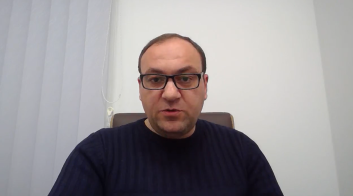
No serious arrangements were reached between Armenia and Russia in 2019 to address the most serious challenges on the bilateral agenda, according to Hrant Melik-Shahnazaryan, a Yerevan-based political analyst.
″2018 ended with Nikol Pashinyan's visit to Russia, with all of us awaiting new developments afterwards - over the natural gas prices, for example, and the Artsakh [Nagorno-Karabakh] issue. The prme minister said, after the meeting [with Russian President Vladimir Putin], that there were good news, but they, practically, were never heard throughout the year. The most important point for Armenia – which was under negotiations at the time – was left hanging in the air,″ he said in an interview with Tert.am, pointing out to a range of indicators demonstrating a zero progress.
Commenting President Putin's official visit back in October, the analyst noted that the Russian leader too, failed to address the key issues at the high-ranking meetings in Yerevan.
″Unfortunately, there are also other concerns. We see, for example, what language of diplomacy Russia applies when addressing the Artsakh conflict. The Azerbaijani president voiced an open criticism against Armenia in Putin’s presence, but they remained unanwered or were otherwise aceeptable to Russia,″ he said.
Addressing Russian Foreign Minister Sergey Lavrov's statement calling for a higher status for the ″Azerbaijani community of Artsakh″, Melik-Shahnazaryan agreed that the kind of remark gives ground for a real concern over the future of relations.
″There is a need for serious work in the Armenian-Russian relations, as there has never been such a deficit of trust in the relationship between the two countries. That's really an unprecedend record, with no serious problem resolved and all processes having come to a halt,″ the expert said, highlighting only a slight progress in the strategic alliance (which he said also saw a decline compared to the previous years).
Asked about the expected developments in the negotiations in 2020, the analyst said he sees that Armenia is now in a state of stalemate (after having conceded positions) ruling any chances for serious expectations.
″Armenia and Artsakh are facing a serious military problem, with the talentless approaches pursued by [Prime Minister Nikol] Pashinyan and his foreign minister undermining the mechanisms of a diplomatic restraint. Azerbaijan was even repeatedly given the chance to trigger a war and lay the entire blame on Armenia. So I think the threat of war is extremely high in 2020.″
Summing up the Armenian-Russian negotiations, Melik-Shahnazaryan noted that all the processes currently rely on the relization of earlier arrangements. ″Armenia is trying to show complailsance in the negotiations; the biggest problem, though, is that the prime minister and foreign minister of Armenia are too far from keeping the situation under control. Even if anti-Armenian statements are made in their presence, they do not react to them, not realizing the hazard. Russia is testing Armenia's allegience without giving anything in return,″ he added.

 Studio One